Politics Amongst Prisoners
Coercion defines the ultimate horizon of what is possible in politics. But what of the non-politics of God?
– 6 min read
Coercion defines the ultimate horizon of what is possible in politics. But what of the non-politics of God?
Thesis: Politics is the sphere encompassing all the possible ways of organizing human society with coercion, or more plainly, violence.
Think about 'politics' as an arena where events take place, but the range of events possible in this realm are constrained by the fact that anyone may, at any time, choose to act contrary to what is good. Evil always remains a possibility. It haunts every human community, unable to be exorcised – only countered and contained.
Every possible action and subsequent outcome in politics must account for the brutal reality that, in the final instance, the last resort available within the space circumscribed by politics is violence. The threat of force, and when necessary, its use, serves as the principle upon which all political orders fall back in times of crisis or survival. The violence of evil can only be countered with more violence. Thus, the question is simply one of who is authorized to exercise violence.
We might say then that politics is the social realm defined by what is possible for humans when they are considered purely from the standpoint of their own faculties or abilities, without reference to higher spiritual powers. For only by the power of God could another principle – love – provide the ground for a social body; an arrangement founded on love stands outside the horizon of any political possibility grounded in coercion, for love cannot be coerced through the use of threat or reward. Love acts freely, gives itself freely, and enjoys itself as its own reward.
In contrast to 'politics,' which finds its alpha and omega in the violence to coerce, this radically new clearing opened up by God represents a previously inaccessible frontier of possible ways for humans to be together with others. God's upside down kingdom grounds community in love, and this communion encompasses a fuller range of relations, inviting entanglements of the natural, human, and divine,
This is why the good news which Jesus of Nazareth proclaimed was the arrival of God's kingdom, not the soul's escape into a disembodied paradise in the afterlife. In line with the prophetic literature which came before, this appearing of God's kingdom amongst the other nations would be both wonderful and terrifying, for it sets up an entirely new and superior order in contrast to every other political kingdom, but it also stands in judgment against these old orders precisely in revealing their hubris and immense cruelty.
Now that Jesus has died and rose again, the stage has been set for the kingdom of God to come into the world, and this reality is unfolding even here and now. This kingdom represents a whole new possibility space which remains as of yet inaccessible to humans in so far as they act as merely political animals.
Coercion defines the ultimate horizon of what is possible in politics. Who will wield the sword in order to provide a countervailing power against evil?
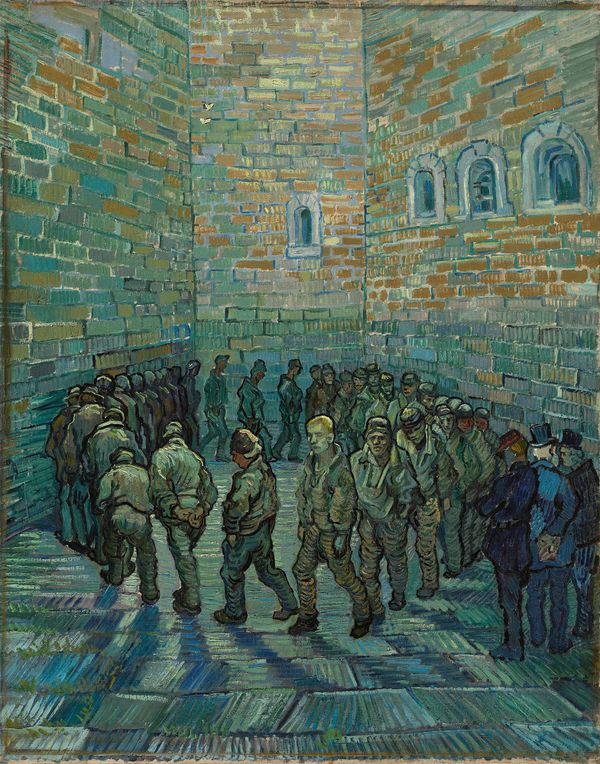
Only violence can ground politics because we live in a situation where the possibility of choosing not to love always remains a possibility (and, indeed, is quite commonplace). We live within a prisoner's dilemma where we have to assume that one or both of the parties will defect at any time. This constraint forms the entire field of possibilities for politics as practiced by human beings.
The prisoner's dilemma is a concept from game theory; two prisoners have been captured and are being interrogated. Both of them have an opportunity to confess their crimes, including their partner's involvement, in return for receiving a lighter sentence ("defect"), or remain silent in hopes that their partner too will remain steadfast, allowing them both to go free from a lack of evidence ("cooperate").
Under such circumstances, the prisoners have more to gain by cooperating, that is, by remaining silent in order to save each other. If they both stay silent, they will both be able to go free. This is the best possible outcome. However, since they cannot guarantee that the other person will not tell all to the authorities in exchange for a lighter punishment, the rational choice for each prisoner is to defect. Thus, out of the three possible scenarios – both cooperate, one cooperates and one defects, or both defect – the double defect is the most likely outcome given the incentives of the situation and the conditions of uncertainty.
So, let's say that politics is a game played amongst prisoners where every game is played under the conditions of the possibility of one or both parties defecting. Let us then call 'defecting' choosing 'evil' and let us call 'cooperating' choosing 'love.'
Note that in staging the dilemma in this way, we raise the question of whether evil is rational or not. Is choosing evil actually in one's self-interest? The prisoner's dilemma hints at an answer here already, as we can see that choosing love is ultimately in both person's best interest, but we see how rational calculation under the circumstances impels towards the lesser decision to defect. Evil has a rigid logic of its own, and seems to serve one's self-interest narrowly conceived.
Besides the other points made, this essay also gestures to the fundamental limitations of operating within the claustrophobic field of human capabilities understood through the lens of utility or "rationality." The strange thing we must acknowledge is that the best outcome can only be accessed through a non-rational act, such as faith, hope, or love, and that the excessive prioritization of rationality ultimately drives us into a race to the bottom in terms of possible outcomes.
This horizon of the inexorable possibility of choosing evil, instead of love, defines the entire field of possibilities, actions, and theories within the political realm. Everything must be calibrated to this constraint. Thus, we may understand the kingdom of God as constituting a possible world where both parties choose to not defect, and they choose this freely, from love, not from any external coercion. This world lies beyond the horizon of possibilities which defines the domain of politics, but occasionally we catch glimpses of it.
The task of God’s Church is to become the experimental laboratory where this kingdom of a different logic, embodying a different horizon of possibilities, comes into our benighted world. The Church’s task is political in the sense that another King is announced among her, and this King’s laws pertain to every aspect of our lives, but it also overturns politics by announcing a previously unimaginable possibility – the beloved community.
(Of course, love is also a violent negativity, but we will address this another time).
The problem comes when we attempt to institute the non-politics of God's kingdom within the political realm – we produce horrors beyond our imagination.
It was Ivan Illich who explored this problem by pointing to the dictum "corruptio optimi pessima" – "the corruption of the best is the worst." Illich was obsessed with the way that the nature of politics changed after the advent of Christ, who introduced into the world God's love. Since the greatest thing imaginable had finally arrived, it brought with it the dark shadow born from love's corruption – a monstrous love which would devour its beloved.
According to Illich, this is what enabled the great horrors of the 20th century – the Shoah, the gulags, the Great Leap Forward, the atom bomb – politics no longer saw its task as the exercise of violence as the social check against greater violence, but now aspired to manifest and dispense a great love like God's love. Foucault describes this same shift where the sovereign doesn't simply manage the threshold of death by extracting taxes or executing subjects, but now seeks to manage every aspect of life towards an optimal state of flourishing. You will have your best life now, whether you like it or not.
This means that human politics becomes most monstrous when it aspires to that which lies beyond its own innate powers – salvation. As the human sovereign applies all the cleverness and technique necessary to attain the good life, they end up producing far greater misery than if they had simply engaged in the more ordinary cruelty of petty greed and violence. Politics which does not understand what lies within its capacities overreaches, and ultimately achieves something far worse.
This also means that the communal life of God's people in this age where God's love is with us now but the kingdom has not appeared in its fullness live within a transitional phase. It does not lie within our power to bring about this kingdom of Love which God has promised – that is His work, and we are a part of it, but cannot achieve it through our own powers – and thus the task which falls to us is practicing and modeling the kind of behavior which marks this other kingdom to come, one which stands in contradiction to the human politics which is constrained by the double defect of evil and the necessity of violence to coerce.
The one who follows God witnesses to another possibility, and does so knowing that the kingdom to which they belong is not fully operative in the world. This puts Christ's disciples in a bind where they must act in a way out of joint with the way the world organizes itself or distributes its rewards. We are playing a different game. We are struggling for a different prize. But the good news is that we do not struggle alone – our fight would be in vain if we did, for we'd simply fall back into the old prisoner's dilemma. But as God works in us, He produces evidence of the world to come which He will bring about by His own hands. We are called merely to put our hand to the plow, and God will give the increase. So let it be. Amen.