How are self-destructive behaviors even possible? How can a creature knowingly choose to wound itself? And, perhaps even more troubling, to find such enjoyment in their own demise? Matthew A. Stanley • Philosophy
Photo by Alexander Andrews / Unsplash How object permanence underlies our experience of self What do we make of the human love affair with the visual realm? As a species, we suffer from a fixation — a veritable obsession with — the world of images. Jean Piaget famously postulated that, early on in their life, a child develops what is called 'object permanence.' Object Matthew A. Stanley • Psychoanalysis
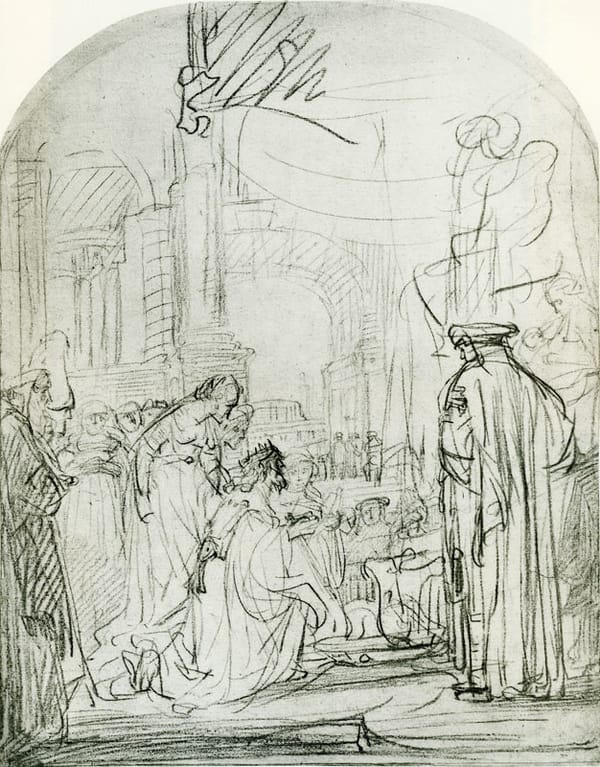
Rembrandt's "Solomon's Idolatry" Idols and Egos: psychoanalysis as a Jewish science The critique of idolatry in Judaism You shall not make for yourself an idol, whether in the form of anything that is in heaven above, or that is on the earth beneath, or that is in the water under the earth. — Exodus 20:4 "The idols of the nations Matthew A. Stanley • Psychoanalysis
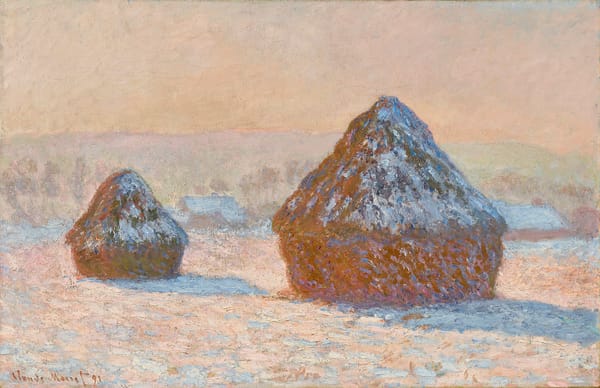
Snow on the Haystacks, by Monet Fearing the gap - how Lacan's thought derives from Saussure 📚I recommend reading these crucial couple of pages from Saussure's Course in General Linguistics to derive the most value from this essay! In his Seminar VI: Desire and its Interpretation, Jacques Lacan briefly states that “a signifier does not concern a third thing that it supposedly represents but Matthew A. Stanley • Psychoanalysis
Notes on chapter 1 of Sartre's "Transcendence of the Ego" Today I'm sharing my notes on the first chapter of Jean-Paul Sartre's Transcendence of the Ego. The notes provide a blow by blow of each of the chapter's main three sections, including some especially relevant quotes. I dug into this book at the behest Matthew A. Stanley • Philosophy
Karma -- the return of the ego in Buddhism Buddhism as traced through the Mahayana branch, especially Ch'an in China and Zen in Japan, proposes a therapy which remedies suffering through a dissolving of the problem. Nirvana is Samsara; Samsara is Nirvana. Realize there is no problem, affect a shift in perspective, and the problem disappears. This Matthew A. Stanley • Buddhism