Nature is already beyond itself
In the name of security, we risk reducing ourselves purely to the level of the natural where we no longer bear the burden of freedom.
– 5 min read
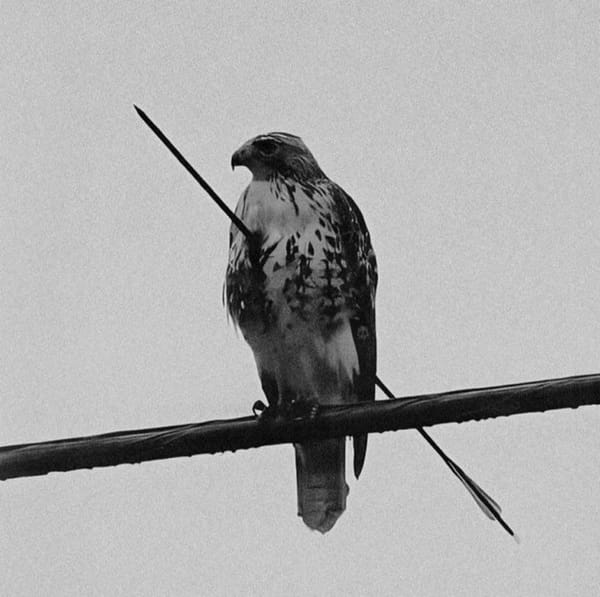
In the name of security, we risk reducing ourselves purely to the level of the natural where we no longer bear the burden of freedom.
Happy New Year, all! You might be wondering why you're receiving this email – I'm consolidating my newsletters Moloch Theory and Samsara Diagnostics into one place where all my projects will live under my name going forward. You can expect both a recap and a looking forward email in the coming weeks, but for now, this essay is an attempt to demonstrate how the philosophical, religious, and psychoanalytic speculations in my Samsara Diagnostics newsletter undergirds my political theory at Moloch Theory. I hope that this piece can help you see how these two projects are integrated.
At one point in the darkly humorous novel The Hitchhiker's Guide to the Galaxy, the titular guide to the galaxy helpfully explains to the reader that "the knack of flying is learning how to throw yourself at the ground and miss."
I think that this uncanny joke confronts us with the peculiar logic of human nature – we are the creature which aims to be natural but misses.
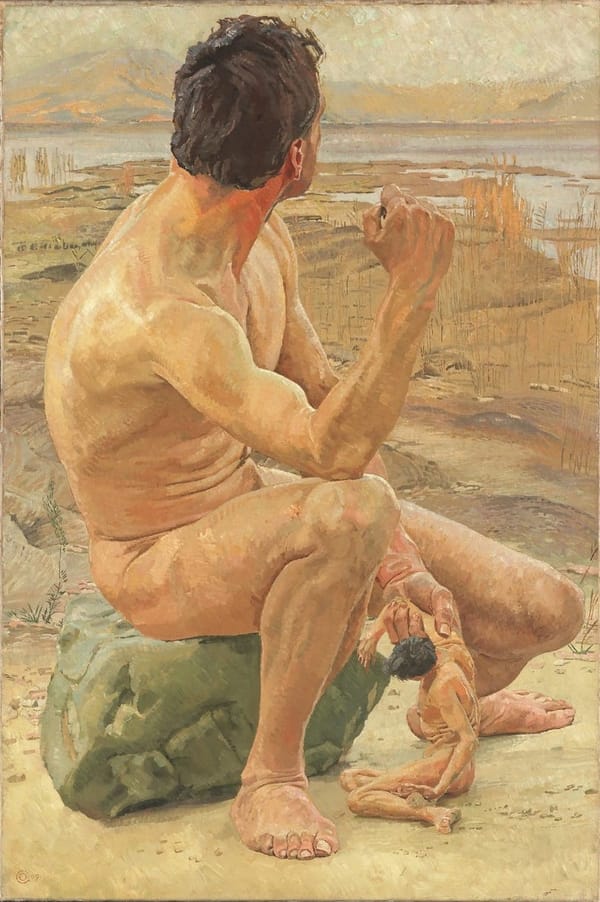
Everywhere we look, each rock, plant, and animal finds its place, faithfully treading the path laid out for its kind long ago. It seems as though the world offers itself blindly to this endless repetition of immutable cycles and all-conquering instincts. The human creature alone stands in the midst of this cosmic symphony, and experiences themself as lacking, as incomplete, as contradictory.
We are the creature enthralled by an image (the ego), condemned to seek to fill a hole which has no corresponding object (desire), while all the while we are caught in the snare of language (drive), forced to alienate ourselves by using words in the hope of being recognized and understood by others.
However, isn't this very alienation what makes us free? If we find that we are not identical with ourselves, doesn't this contradiction also serve as the ground of our possibilities? Much of the writing here at Samsara Diagnostics turns on this paradoxical insight that our limitations and our lack as creatures are precisely what grants us the capacity to choose to live different from the ways of the world.
What if, to restate the Christian confession that we are supernatural creatures, we were to instead play with the creed that we are unnatural creatures? We are different not because we are beyond nature, but because in us nature (and perhaps God too?) confronts its own freedom to be otherwise than itself.
Nature is already beyond itself. The world's inability to perfectly coincide with itself becomes the wellspring for a profound pain but an even deeper enjoyment. Humans are the bearers of this burden, both blessed and cursed to bring this lack into full awareness and grapple with it as we carry it within our bodies and souls.
In this sense, we humans are deformed and disabled creatures, continually circling a primordial wound which we cannot heal, and yet this wound also opens up a new field of play where we can throw ourselves away with dancing and singing, with sorrow and poetry, with grace and love. Disjointed, we move. Dying, we live.
This is why I fully embrace the much maligned "transcendental turn" in philosophy taken by Immanuel Kant in which he asserts that we cannot eliminate the subject, or the "I," from knowledge itself. No knowing without a knower, no truth without a subject. The very notion of knowing the truth already implies that we are caught in a dilemma where we are one of the variables involved.
Psychoanalysis simply takes this quandary one step further by insisting that the subject which we are is also always-already divided or multiple. Serendipitously, by pushing us deeper into the problem, psychoanalytic theory helps us break through to the other side. If we are incomplete, we are not stuck within ourselves. If our center remains outside of us, then the outside is also our inside. Solipsism is thus strictly impossible. We are therefore free because we are broken.
All of this speculation about the human animal and the nature of knowledge which I have undertook in the preceding years at Samsara Diagnostics, and which I attempted to briefly sketch above, provides the underlying framework for Moloch Theory, my research project where I write about the increasing grip of bureaucratic power, the pernicious effects of school-brain, and the complicity of the professional-managerial class with the ravaging flows of Capital.
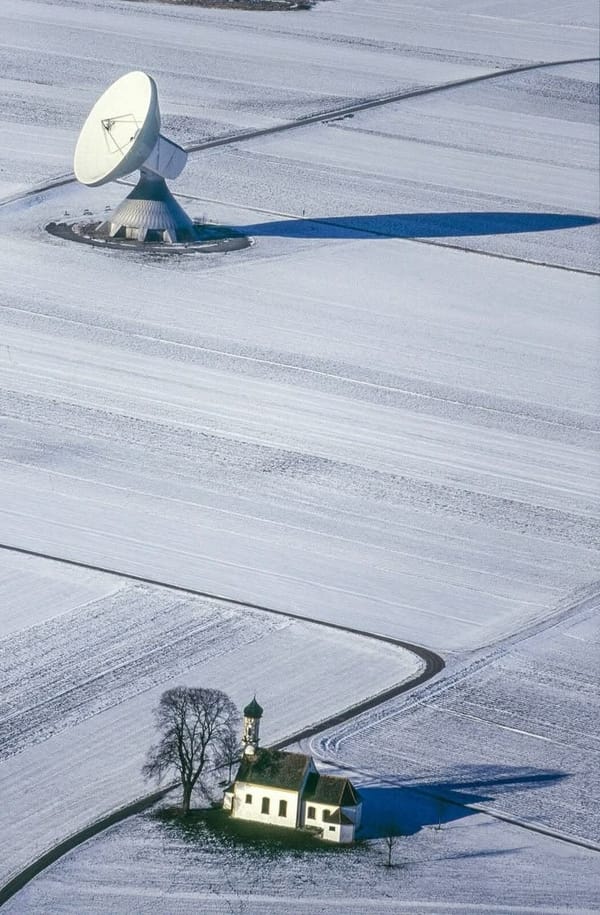
I believe that today we worship the spirit of Moloch, the cybernetic God who offers us deliverance from death, through the quantification of everything, the elimination of uncertainty, and the optimization of all possible events in advance. The scientific management of society, by the flows of Capital and the human security apparatus operating in tandem, form an ever-expanding control system which has as its end the elimination of the lacks and limits which are the foundation of our freedom to engage in creative action.
And what does Moloch demand in return? The child within us, that natal force which alone harbors the possibility of birthing something new into the world. Only this freedom is what cannot be accounted for ahead of time, making it the truest threat to Moloch's gospel of infinite progress which promises to banish alienation, shame, pain, and ultimately, death.
As we confront our political and social situation where we live under the reign of Capital as the primary schema for apprehending and managing all of life, we must resist Moloch's insidious promises to close that gap which allows us to remain simultaneously lacking and free. The wholeness which Moloch offers is illusory. To be whole would be to achieve identity with one's self, which would then preclude the possibility of any future change or action. This is, ironically, death.
In the name of safety and security, we risk reducing ourselves purely to the level of the natural where we will no longer bear the burden of freedom. We are the creature which suffers, so what happens if we wage war against suffering? If we overcome death, how will birth (or re-birth) be possible? If Moloch prevails, how will we be any different than machines which click along exactly as intended?
Another God calls to us though – this is my belief and my source of hope. This God spoke light into the darkness in the beginning, He addresses us from that rugged cross on Golgotha's hill, His voice echoes from the empty tomb in the garden, and His Spirit even speaks light into our darkened hearts this very minute.
Love, the other possibility, patiently lurks among us, inviting us to join in His work bringing about an alternative project, one based in love rather than fear. This God is calling from all nations, tribes, and tongues a family who will inhabit a different sort of kingdom than the one founded by Moloch. Death is swallowed up by life, not simply by the absence of death. This eternal life includes our wounds (and even the wounds of God!), taking suffering into itself without fear or despair.
I am a conspirator for this kingdom. So, as I try to weave these two projects, Moloch Theory and Samsara Diagnostics, together in the pages of my writing, please understand them both in their difference and in their unity. Thank you for reading, and perhaps you'll come to join me in this conspiracy someday.